
Slipring in Medical Equipment
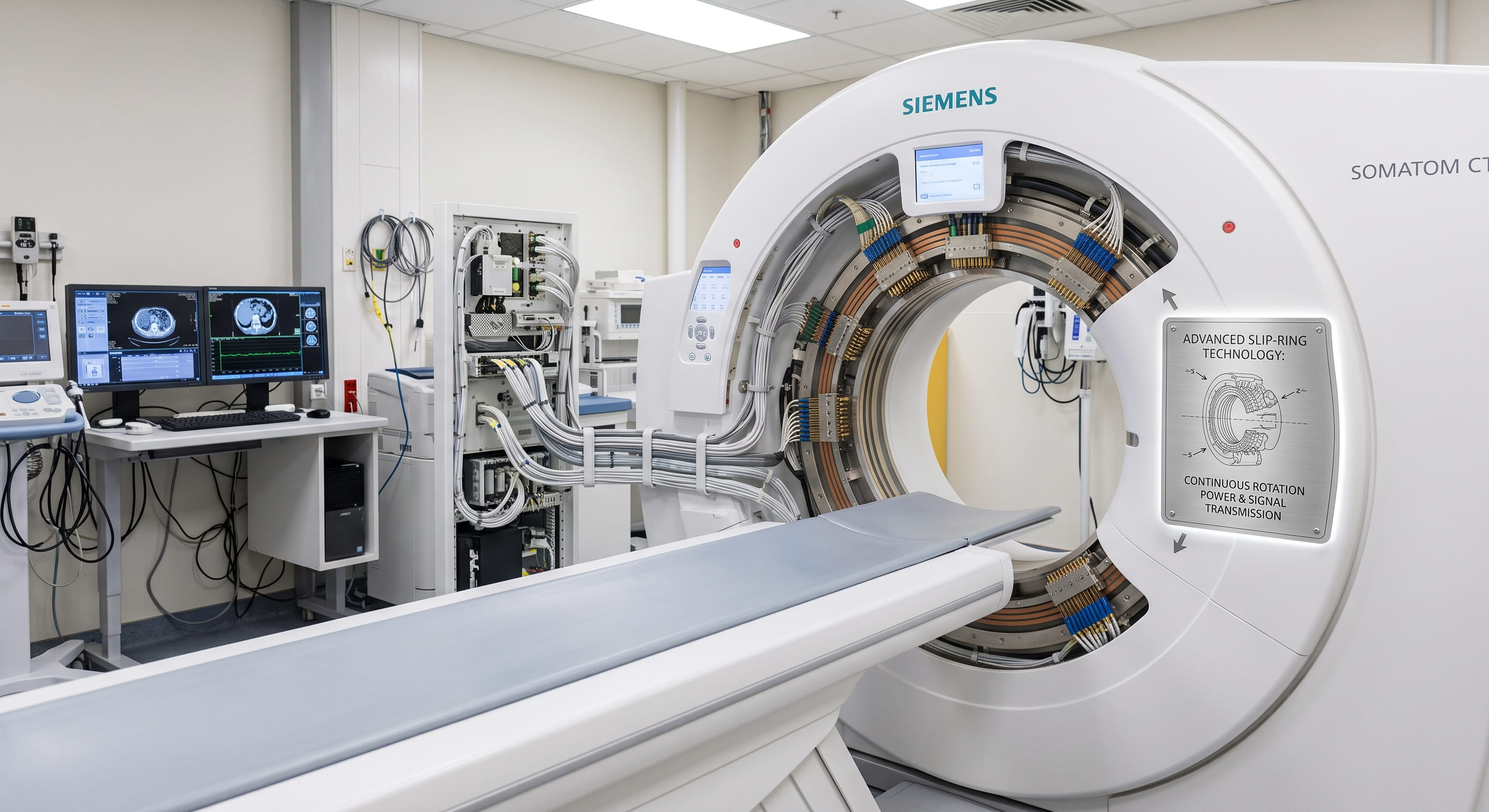
Medical equipments use sliprings to transmit power and signals from stationary part to a rotating part. Some examples of medical equipment that use slip rings include:
CT scanners:
Sliprings transmit power and data between the stationary control console and the rotary gantry. Therefore the gantry rotates while still providing power to the X-ray tube and detectors, and sending data back to the console for image processing.
X-ray machines:
Sliprings transmit power and data from the stationary control console to the rotating arm. Therefore the arm rotates while still providing power to the X-ray tube and sending data back to the console for image processing.
Angiography equipment:
Angiography equipment creates images of blood vessels. Sliprings transmit power and data from the stationary control console to the rotating arm. Therefore the arm rotates when still providing power to the X-ray tube and sending data back to the console for image processing.
Endoscopy equipment:
The endoscopy equipment creates images of the inside of the body. Slipring transmits power and data between the stationary control console and the rotating camera. Therefore the camera rotates while still providing power and sending data back to the console for image processing.
Surgical Robots:
Sliprings transmit power and data from the stationary control console to the rotating arms. The arms rotates while still providing power and sending data back to the console for controlling the robot's movement.
Overall, the use of slip rings in medical equipment allows for the rotation of a component while still maintaining a constant connection for power and data transmission.