
OSI Model in Communication Systems
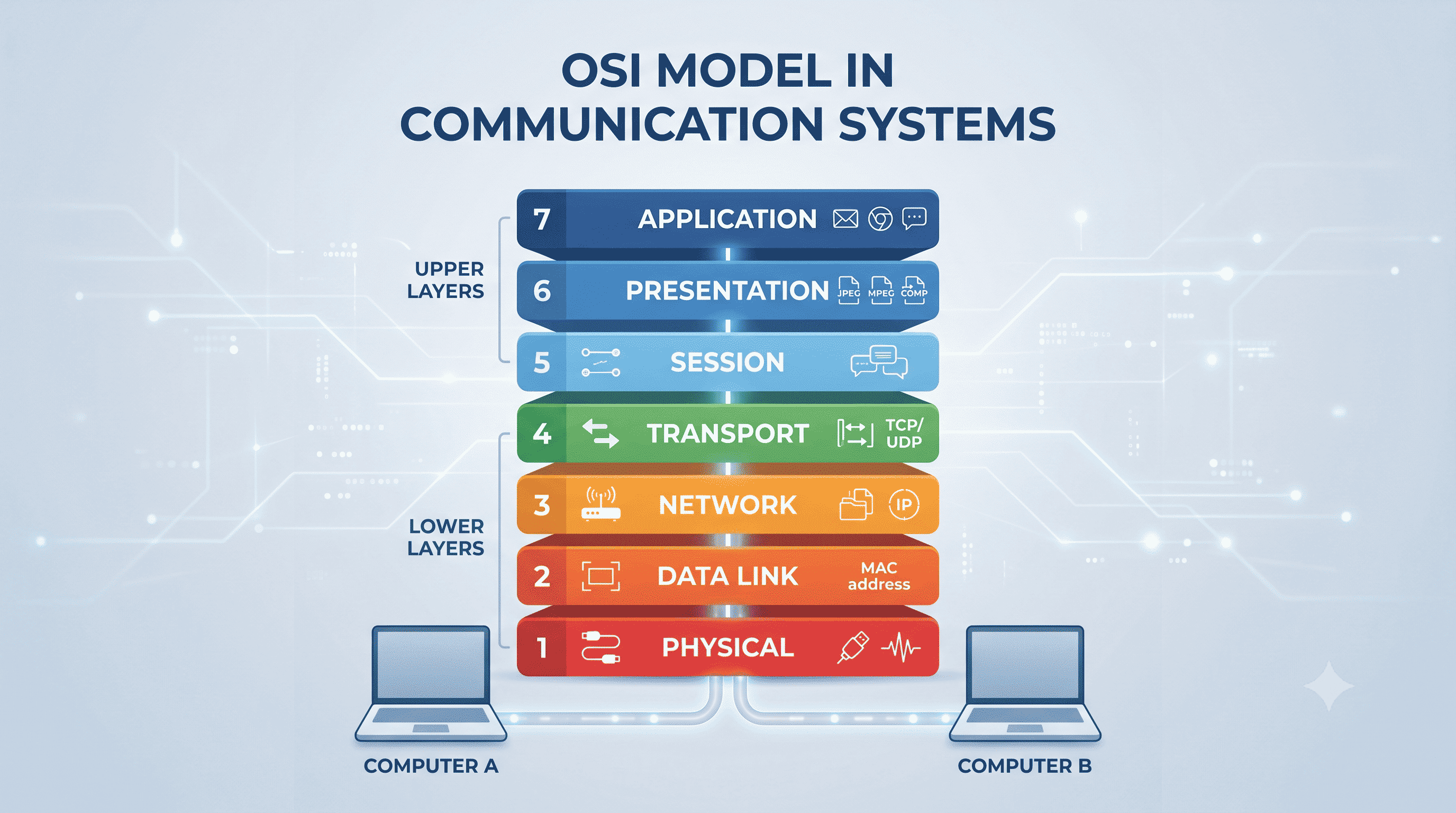
OSI is notional model that define how is communication between two computers. This model have 7 layers such as physical, data link, network, transport, session, presentation and application. OSI model provides usage of network architecture and protocols like components of network product.
UPPER LAYERS Application HTTP / FTP / SMTP
Presentation JPEG / GIF / MPEG
Session AppleTalk / WinSock
LOWER LAYERS Transport TCP / UDP / SPX
Network IP / ICMP / IPX - router
Data Link Ethernet / ATM -switch,bridge
Physical Ethernet /Token Ring -hub,repeater
1- Physical Layer:
This model is hardware layer of OSI model. It is interested in signals like fiber signals, electric signals and radio. RS232, FDDI, ATM protocols, repeater devices, hub, ethernet and cables work in this layer. (Repeater: The device that provides high quality and more speedy internet accessing in place or time which the signal of the internet is low.) (Hub: Hub sees coming data like electrical signals and multiplies these signals and sends them to other ports.)
2- Data Link Layer:
This model is data link layer of OSI model. The datas are send from network layer to phsical layer as divided parts that are named frame. Frame provides controlled sending the datas. In this layer, other computers on network are defined, who use the cable is detected, the datas coming from physical layer are controlled against errors. It is divided into two sublayers, LLC and MAC. In addition, the switch device also works in the second layer. The accessing methods such as Ethernet, ATM and Token Ring work on this layer.
3- Network Layer:
The switching and routing technologies work on this layer. Data packages are directed to target with router. Router device, TC, IP, IPX, AppleTalk protocols work on network layer. (Router: It performs traffic routing on the Internet and transmits data packages between computer networks.)
4- Transport Layer:
The datas are transmitted end to end in this layer. This layer acts as a bridge between transport set and applicationn set. It divides the data that coming from up layers in network package dimesion. The layer increases quality of service of network. The layer checks if datas arrive on time. The protocols like TCP/UDP/PX run in this layer.
5- Session Layer:
This layer is session layer of OSI models. A computer can communication with many computers at the same time. It provides that computer can speak properly with protocols such as NetBIOS and Sockets. The layer takes part in establishing, managing and terminating connections between applications.
6- Presentation Layer:
This layer translates the datas to be sent so that it can be understood on the screen of the other computer. GIF, JPEG, TIFF, EBCDIC, ASCII etc. processes run in this layer.
7- Application Layer:
The users consitute datas in softwares like Chrome, Firefox, Skype on application layer. The layer is closest to the user. It is responsible for process between end user and users. The layer supports sending files, mail processings and application processing for other network software services. The protocols like HTTP , FTP and Telnet run in this layer.