
Temperature Sensor
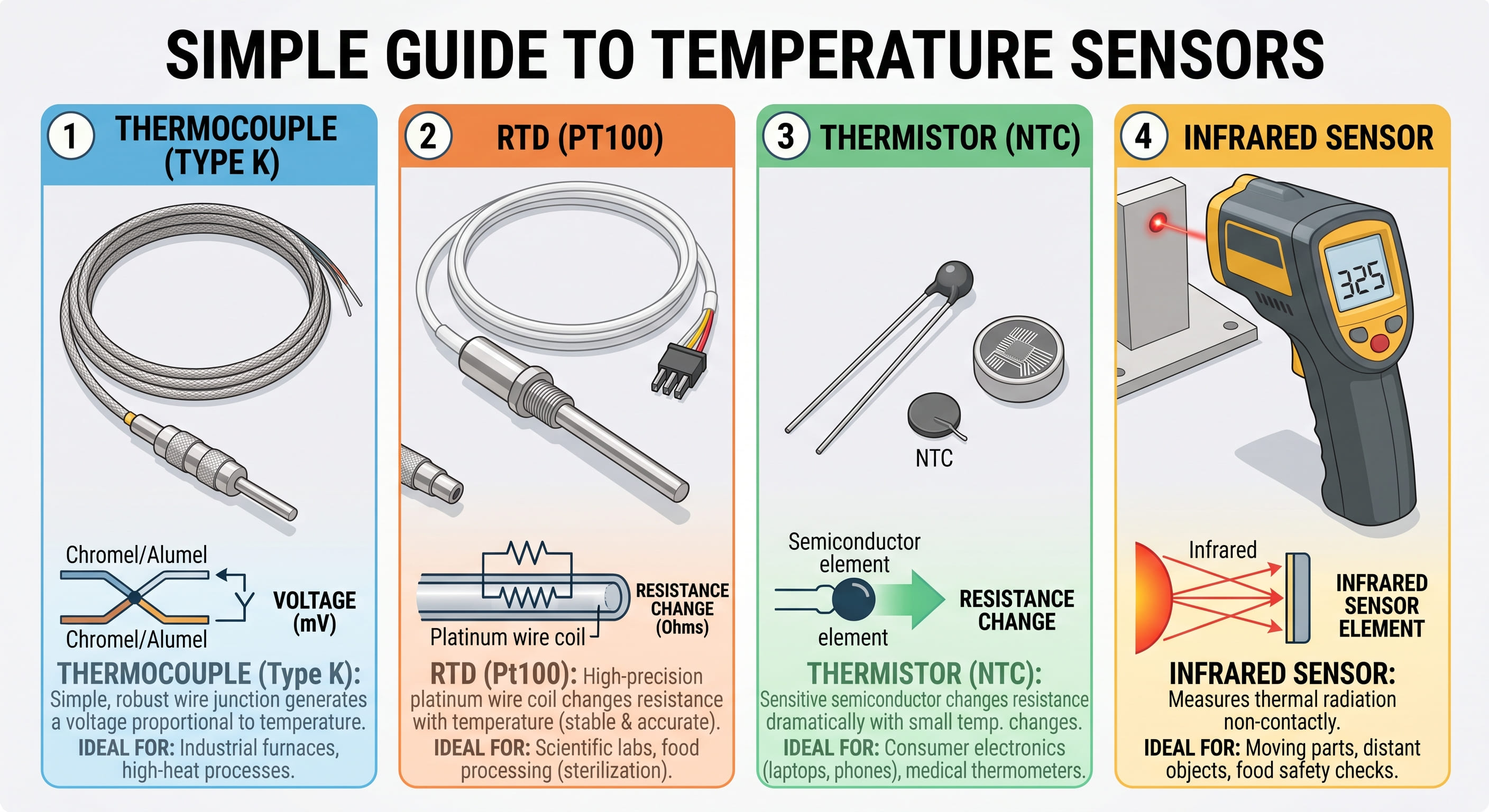
Temperature sensor measure the temperature of an environment or object. These sensors are perfect for wide range of applications such as industrial processes to consumer electronics. In this blog post, we will explore the different types of temperature sensors, how they work, and their various applications.
Types of Temperature Sensors
There are several different types of temperature sensor available. We will explain thermocouples, RTDs, thermistors, and infrared sensors.
Thermocouples:
They consist of two different metal wires. These wires joined together at one end. When these two wires are exposed to a temperature difference, a small electrical voltage is generated. This voltage can then be measured. Then, this value determines the temperature of the environment.
RTDs (resistance temperature detectors):
They are made up of a resistor that changes resistance based on the temperature. The resistance is measured and converted to a temperature reading.
Thermistors:
Thermistors material changes resistance based on temperature. The resistance is measured and converted to a temperature reading.
Infrared sensors:
They work by measuring the amount of infrared radiation emitted by an object. This radiation is directly related to the temperature of the object, allowing for precise temperature measurements.
Applications of Temperature Sensors
Temperature sensors are perfect for a wide range of applications, such as industrial processes, HVAC systems, medical equipment, and consumer electronics.
In industrial settings:
Temperature sensors monitor and control processes such as heating, cooling, and fermentation.
In HVAC systems:
Temperature sensors regulate the temperature of buildings and homes.
Medical equipments:
The equipments such as incubators and blood warmers, rely on temperature sensors to keep patients at safe and consistent temperatures.
Consumer electronics:
Smartphones and laptops use temperature sensors to ensure safe and proper functioning.