
Profinet
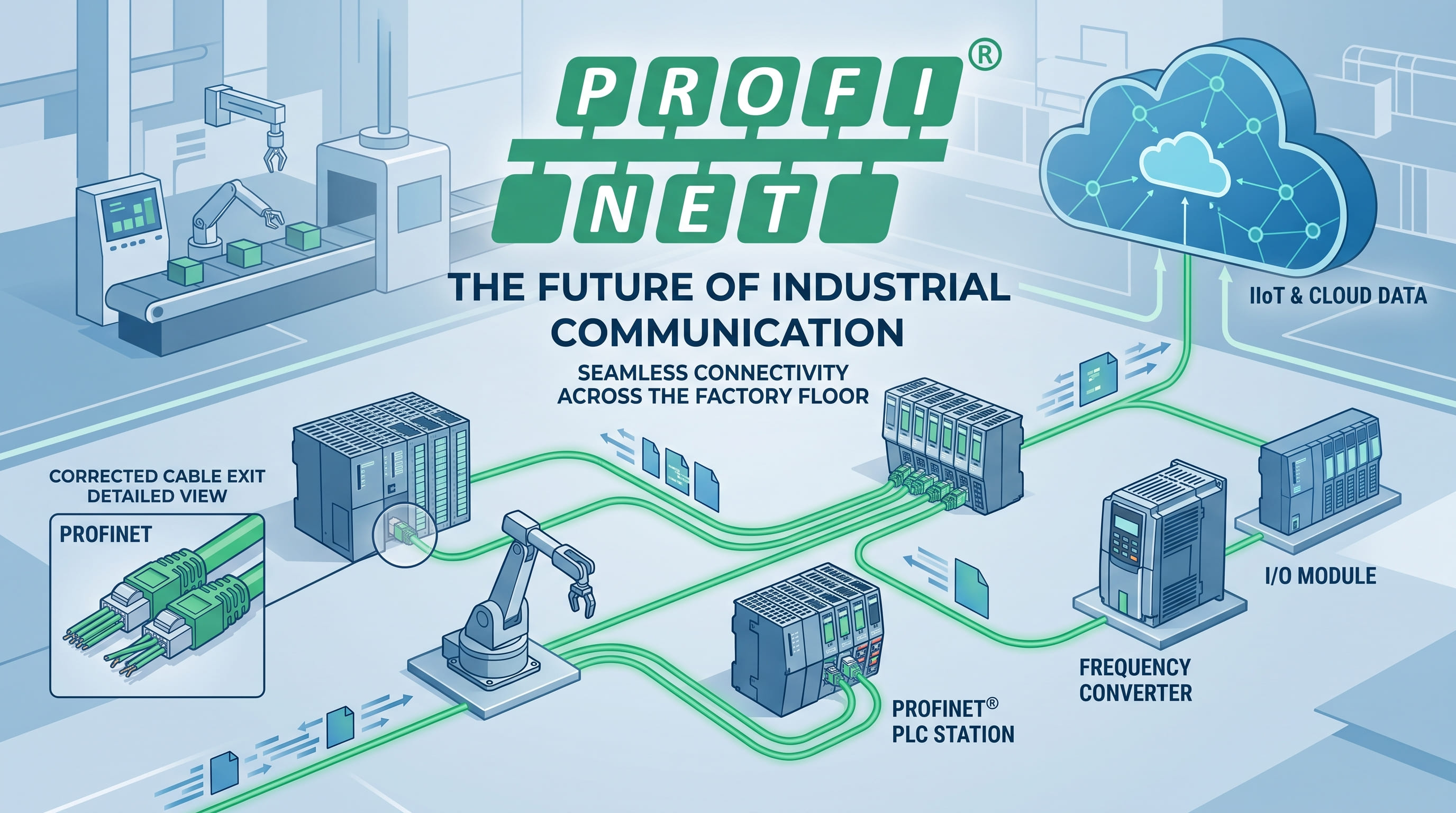
Profinet is an industrial Ethernet network technology designed for automation systems in the manufacturing, production, and process industries. Siemens developed Profinet in the late 1990s, and today, it is one of the most widely used industrial Ethernet technologies. Companies use it in various applications, such as assembly lines, packaging machines, and control systems.
Profinet offers several benefits, including high speed and reliability. These features make it ideal for real-time control systems that require precise timing and data accuracy. Profinet supports data transfer speeds of up to 100 megabits per second and uses theprevalent one in computer networks standard Ethernet communication protocol. Therefore this compatibility makes it easy to integrate with existing IT infrastructure, eliminating the need for specialized networking equipment and simplifying implementation and maintenance.
Profinet is also scalable. Companies can create networks with hundreds of devices, making it a good choice for large and complex automation systems. Furthermore, it supports multiple communication profiles, including real-time, isochronous, and asynchronous. That allows it to handle various data types and transfer requirements.
Although diagnosing and maintaining devices is simple with Profinet. The technology provides detailed information about the status of devices on the network, allowing engineers and technicians to identify and resolve issues quickly. Profinet also supports remote maintenance, allowing devices to access and configure from a central location, avoiding the need for on-site visits.
In conclusion, Profinet is a robust and versatile industrial Ethernet technology that offers several benefits for automation systems. They are like manufacturing, production, and process industries. Its high speed and reliability, scalability, support for redundancy, and device diagnostics and maintenance for various applications. Besides, the widespread adoption and support from manufacturers and vendors ensure that Profinet will remain a leading industrial Ethernet technology in the future.