
USB 3.0 & USB 2.0
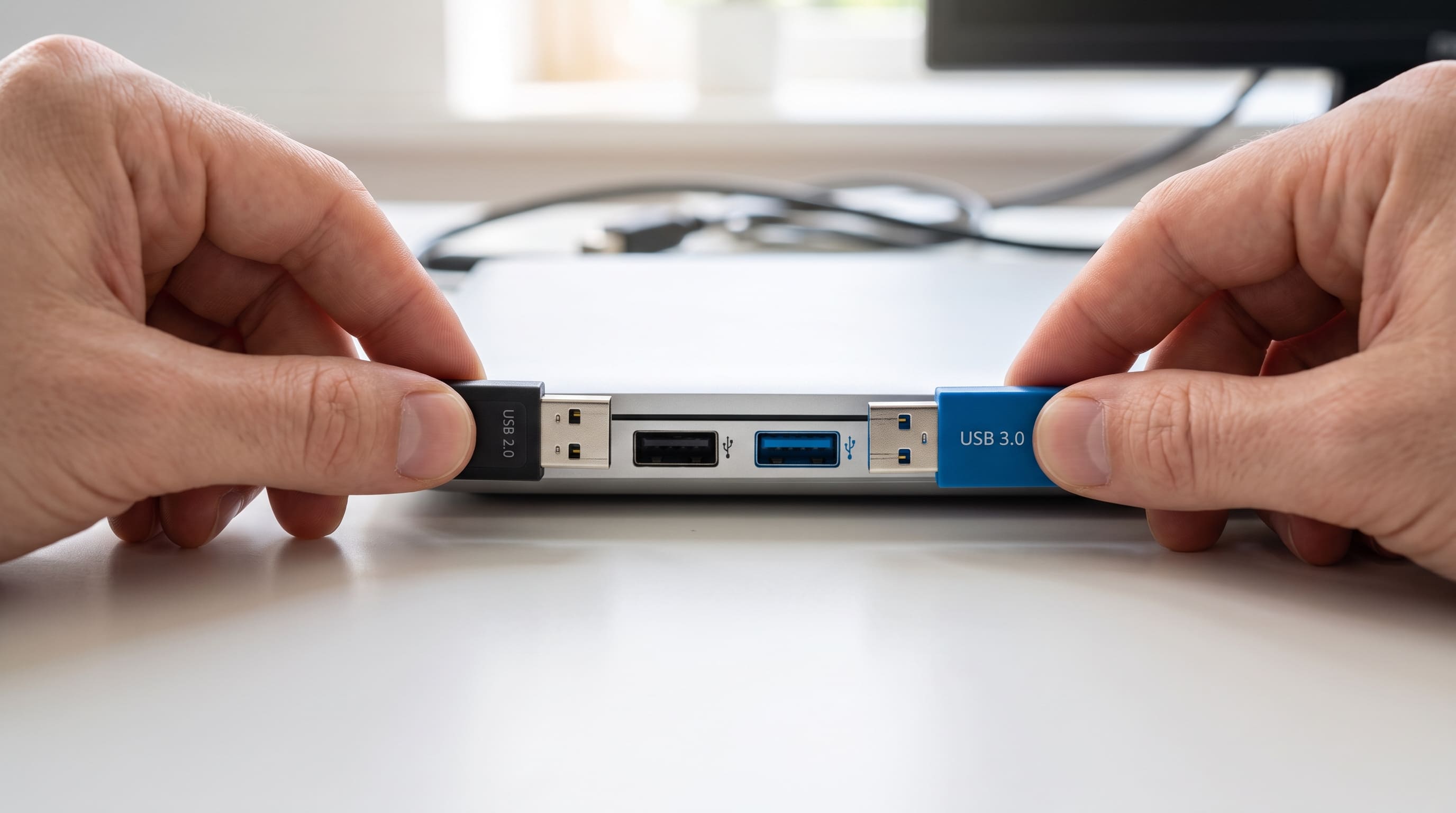
USB (universal serial bus) is a connection format that allows computers and external hardware to communicate. It was developed in 1996 by Ajay V. Bhatt, an Indian computer engineer. Due to its plug-and-play capability, it has become the standard computer connection method for many external hardware units. It is estimated that approximately 10 billion units have been sold to date. There are 4 generations of usb: USB 1.x, USB 2.0, USB 3.0, USB 4.x. The most widely used are 2.0 and 3.0.
2.0
USB 2.0 was designed as a serial data connection protocol and was the most widely used standard from 2000 to 2008. 2.0 is a connection path for transferring data and power between devices and supports 127 devices. Besides it has a choice of low speed (1.5 Mbps), full speed (12 Mbps) and high speed (480 Mbps) data transfer rates. It also features plug-and-play integration and the ability to transfer files between devices, reducing the need for protocols. However this offers greater convenience and flexibility for users. 2.0 is backward compatible with USB 1.1, making it compatible with earlier devices.,
3.0
USB 3.0 is a connectivity standard called Universal Serial Bus 3.0. This standard is an upgraded version that offers faster data transfer and higher energy efficiency. 3.0 offers 10 times faster data transfer than 2.0 and is also more energy efficient. This can be used to transfer larger files faster and charge devices that require more energy. Additionally, 3.0 is also compatible with older versions and, thanks to backward compatibility, older devices can also be used.
Differences between USB 2.0 and 3.0
The most obvious difference between 2.0 and 3.0 is speed. 2.0 offers a theoretical data transfer rate of 480 Mbps, while 3.0 offers a theoretical data transfer rate of up to 5 Gbps. In addition, 3.0 has more advanced energy management and powering features. A 3.0 connection delivers 900 mA of power, while 2.0 delivers 500 mA.Furthermore, 3.0 is physically similar to 2.0 and provides backwards compatibility, but the design and colors of 3.0 devices are usually different (blue color). 3.0 offers better data transfer speed and energy management, allowing you to transfer video files, photo albums and large data files quickly and impressively. In terms of price, USB 2.0 is predictably more affordable.